
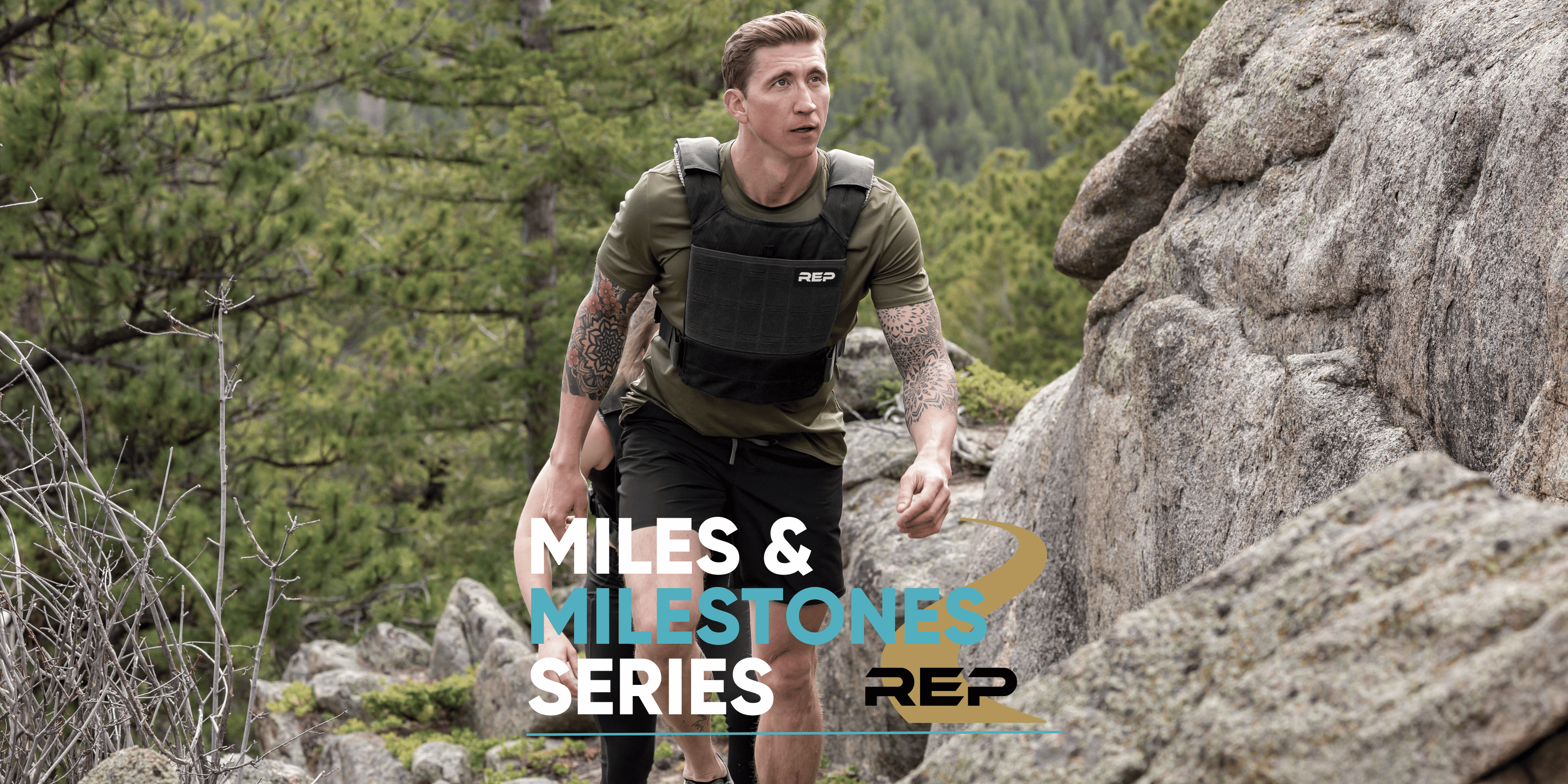
In 2027, The National Running Show will mark its 10th anniversary and as part of the celebrations we are featuring an in-depth series with key brands - Miles & Milestones: 10 questions for running brand success.
“Last year was our opening year in the UK, and the National Running Show 2025 was the first event we attended. Shows like this put REP directly in front of a highly relevant, motivated audience.” - Yasmin Haycock, UK Marketing Manager at REP Fitness.
REP Fitness is a prominent strength and conditioning equipment brand that engineers high-quality gym gear for home lifters and commercial facilities. The company has earned a strong reputation by bridging the gap between cheap entry-level equipment and expensive luxury brands. Based in the USA but operating with localised distribution and dedicated warehouses across the United Kingdom, they provide durable products featuring diverse colour finishes and robust warranties without the hassle of import fees.
In this Q&A, we catch up with Yasmin Haycock, UK Marketing Manager at REP Fitness, to discuss the brand’s evolution and preview what they have in store for the National Running Show 2027.
1. Can you start with the origin story of REP Fitness? When was the concept formed?
REP Fitness was founded in 2012 by brothers Ryan and Shane McGrotty in Longmont, Colorado. The concept took shape a year earlier, in 2011, when the brothers - both strength training enthusiasts - moved to Colorado and grew frustrated with the fitness equipment industry. Their guiding question was simple: “Why can't you have an amazing experience when buying fitness equipment?”
They started small: a 1,200-square-foot garage and storefront, a handful of pieces of equipment, and bumper plates stacked to the ceiling in a closet. From day one, the business was built on three principles that still guide REP today: innovation, customer service, and value.
2. How long did the process take from the idea to creating products?
Roughly two to three years. The idea was conceived in 2011, REP launched in 2012, and by 2014 the company had outgrown its original space, moved into a larger 3,000-square-foot facility, hired its first employee, and released its first signature product: the AB-3000 adjustable bench. That product is a useful marker of the shift from ‘garage start-up’ to a real equipment brand.
3. Have you seen an increased demand from runners for strength training equipment?
There's a general awareness now that strength training is essential to supporting any form of physical exercise, and running is no exception to that rule. Our first year exhibiting at the National Running Show demonstrated that the demand is there for high-quality strength equipment within the running industry - not only to strengthen what runners already have, but to help prevent injuries.
4. What makes REP Fitness different from its competitors?
What makes REP different comes down to combining commercial-grade quality with home-gym accessibility, and then backing that up with genuine customer obsession at every stage.
On the product side, REP builds equipment that would hold up in a commercial gym environment but prices and packages it for the home user, which is a gap most competitors haven't closed as effectively. That's paired with a level of innovation and attention to detail that shows up in the small things: tolerances on welds, knurling patterns, finish options, and iterative refinements based on how people use the equipment. REP treats a product launch as a starting point rather than a finished product, leaning heavily on direct community feedback to keep refining designs over time. That same philosophy has driven REP's deliberate expansion beyond strength staples like plates, racks, and benches into adjacent categories such as the Strive cardio line, reflecting the view that strength and conditioning are complementary disciplines rather than competing ones.
Customer service is another differentiator. REP treats support as part of the product experience rather than an afterthought, which matters a lot in a category where people are investing in equipment meant to last for years.
And physically, REP has the largest strength showroom in Europe, which is a meaningful differentiator versus most competitors. Customers can walk in, test the actual equipment, feel the build quality, and make an informed decision before they buy, rather than relying on marketing photos or reviews.
5. What strength equipment would you recommend for a runner who is just starting to add strength training to their routine?
Start simple and compound-movement focused. An adjustable bench plus a modest set of dumbbells or a barbell covers the big three for runners: squats, deadlifts (or Romanian deadlifts), and lunges, which build the glute, hamstring, and quad strength most linked to injury-resilient running form. Add resistance bands for hip and glute activation work - these are cheap, portable, and directly target the single-leg stability that running demands.
From there, a kettlebell or two adds variety for single-leg and rotational core work (step-ups, single-leg RDLs, carries), and pairing that strength work with time on the Strive Curved Runner lets a new lifter build the habit of treating cardio and strength as one integrated routine, rather than two separate disciplines competing for time.
6. What is your process for new product development?
The company's growth from a single garage product line into distinct categories (strength, cardio, recovery, flooring) reflects a pattern of expanding based on what its existing customers are asking for next.
Behind that process is an in-house engineering team of over 30 people, that owns product development from concept through to production, rather than outsourcing design decisions to third parties. REP works closely with its manufacturing partners throughout that process, staying hands-on with sourcing and quality control rather than treating manufacturing as a black box once a design is handed off. That close collaboration, combined with a meticulous attention to detail on things like materials, tolerances, and finish, is what allows the iterative, feedback-driven approach to actually work in practice: the team can act on what customers are telling them because they're close enough to the manufacturing process to make changes.
7. What are the main features of the Strive Curved Treadmill that would be of particular interest to runners?
The defining feature is the curved, motor-free belt: it's self-powered, so the runner's own stride drives the belt rather than a motor dictating pace. That mimics outdoor running mechanics far more closely than a flat motorized treadmill, encouraging a smoother, more natural stride and better running form, while reducing joint impact.
It also offers eight levels of adjustable magnetic resistance and an adjustable deck grade (0% or 3%), so it works for everything from an easy jog to sprint intervals to heavy sled pushes - useful for runners who want to combine conditioning and strength-adjacent work on one machine. A dual console (a main LCD plus a heads-down display) tracks distance, speed, power and calories, and it connects via Bluetooth and ANT+ to heart rate monitors and FTMS-compatible running apps. It's built to handle barefoot training and multiple hand positions for sled work, and because it needs no power outlet, it can even be used outdoors.
8. What sort of training is the air bike effective for?
An air bike shines for shorter, harder conditioning work, because resistance scales with effort, it's very effective for HIIT-style intervals or as an active-recovery/cross-training tool on easy days, without any impact loading.
9. How long have you been involved with The National Running Show and what would you say are the main benefits?
Last year was our opening year in the UK, and the National Running Show 2025 was the first event we attended. Shows like this put REP directly in front of a highly relevant, motivated audience - runners who are actively thinking about performance and injury prevention, often for the first-time considering strength equipment as part of that picture.
It's a natural stage for connecting the dots between running and strength training in person, letting attendees physically try equipment like the Strive Curved Runner rather than just seeing it online, and building relationships with the run clubs, coaches, and physios who influence runners' purchasing decisions.